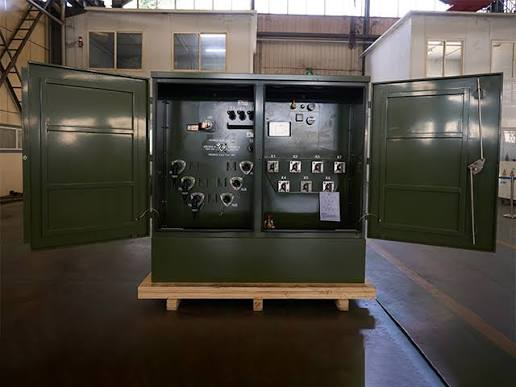
3000 kVA Transformer: Key Considerations for Industrial and Commercial Power Systems
A 3000 kVA transformer is a high-capacity transformer designed for electrical systems with substantial power requirements. Rated at 3,000 kilovolt-amperes, or 3 MVA, this class of transformer can be used in manufacturing facilities, commercial developments, utility distribution systems, data centers, infrastructure projects, and other applications with significant electrical demand.
Selecting the correct transformer requires more than matching the kVA rating to the expected load. Voltage, phase configuration, impedance, cooling, installation environment, protection, and future expansion all need to be considered during the engineering stage.
Understanding the 3000 kVA Rating
The 3000 kVA rating represents the transformer’s apparent power capacity. Transformers are commonly rated in kVA rather than kW because the electrical equipment must handle both current and voltage.
For a three-phase transformer, the basic relationship is:
kVA = √3 × Voltage × Current ÷ 1,000
The transformer’s current changes between the primary and secondary sides because the voltage levels are different.
For example, a 3000 kVA transformer operating at a relatively low secondary voltage will carry significantly more current on its secondary side than on its higher-voltage primary side.
The actual real power delivered in kilowatts depends on the power factor of the connected loads.
Where Can a 3000 kVA Transformer Be Used?
A 3000 kVA transformer can be appropriate for facilities with considerable electrical demand. Common applications include:
- Manufacturing plants
- Large commercial buildings
- Industrial facilities
- Hospitals and institutional campuses
- Data centers
- Utility substations
- Mining facilities
- Agricultural processing sites
- Infrastructure projects
- Renewable energy installations
The correct transformer capacity should be established through a detailed load assessment rather than estimated solely from the building’s size.
Primary and Secondary Voltage
Voltage specifications must be established before selecting a transformer. The primary voltage needs to correspond with the incoming supply, while the secondary voltage must match the downstream distribution system.
A 3000 kVA transformer can be manufactured with different voltage combinations depending on the project requirements.
Tap settings may also be incorporate to allow voltage adjustment within a specify range. The available tap configuration and adjustment procedure should be confirmed from the manufacturer’s documentation and electrical design.
Three-Phase Configuration
Many 3000 kVA transformers are designed for three-phase power systems, particularly in commercial and industrial environments.
Three-phase distribution is well suit to large electrical loads because it can efficiently supply motors, HVAC systems, manufacturing equipment, pumps, compressors, and other high-demand equipment.
The transformer’s phase configuration must match the electrical system for which it is intended.
Oil-Filled and Dry-Type Options
Transformers at this capacity may be available in different construction types, depending on the manufacturer and application.
Oil-filled transformers use insulating liquid for cooling and electrical insulation. They are widely used in utility, industrial, and outdoor applications.
Dry-type transformers use solid insulation and air-based cooling arrangements. They can be consider for certain indoor installations and applications where liquid-fill equipment is not appropriate.
The decision should consider installation location, fire safety requirements, environmental conditions, maintenance requirements, and the specifications of the electrical system.
Load Calculation Is Essential
Transformer selection should begin with a proper understanding of the facility’s electrical load.
A typical industrial site may have motors, pumps, compressors, process equipment, HVAC systems, lighting, computers, and other loads operating at different times. The maximum demand may therefore be different from the total connected load.
Engineers can assess factors such as:
- Maximum demand
- Load diversity
- Power factor
- Motor starting current
- Harmonic loads
- Continuous operating loads
- Future electrical expansion
These calculations help determine whether 3000 kVA provides adequate capacity.
Motor Starting and Voltage Drop
Motors can draw substantially more current when starting than during normal operation. This temporary increase can affect transformer voltage and system performance.
For facilities with large motors, the starting characteristics should be evaluated before selecting a 3000 kVA transformer.
Depending on the application, engineers may also consider motor-starting methods, sequencing, variable frequency drives, or other measures to manage starting demand.
Transformer Impedance
Impedance is an important transformer specification because it affects voltage regulation and short-circuit current.
A transformer with lower impedance may allow greater fault current on the secondary side. Higher impedance can limit fault current but may also influence voltage drop during heavy loading.
The transformer’s impedance should therefore be coordinated with the ratings of downstream switchgear, circuit breakers, cables, and distribution equipment.
A short-circuit study can help establish the expect fault levels and verify that connect equipment is appropriately rate.
Cooling and Temperature Rise
Transformers generate heat during operation, and the cooling system must remove that heat effectively.
The cooling arrangement depends on transformer construction and design. Oil-filled units may use radiators and natural or forced cooling systems, while dry-type units may use air-based cooling.
Operating temperature can be affect by ambient conditions, transformer loading, altitude, ventilation, and enclosure design.
A transformer intended for a hot or enclosed environment may require different specifications from one installed in a cooler, open location.
Protection and Monitoring
A transformer of this size requires carefully coordinated protection.
Depending on the design, protection systems may include overcurrent protection, differential protection, temperature monitoring, surge protection, and other devices intended to detect abnormal operating conditions.
Protective relays and circuit breakers should be coordinate with upstream and downstream equipment so that faults can be isolate without unnecessarily interrupting unaffected parts of the electrical system.
For larger installations, protection and coordination studies are often an important part of the engineering process.
Installation and Foundation Requirements
A 3000 kVA transformer can be large and heavy, so the physical installation needs careful planning.
The site may require:
- A reinforced concrete foundation
- Appropriate electrical clearances
- Cable trenches or underground conduits
- Grounding infrastructure
- Transformer access
- Lifting and positioning arrangements
- Drainage
- Fire protection
- Maintenance access
The foundation must be designed according to the actual transformer dimensions and weight.
For outdoor oil-filled equipment, liquid containment and environmental requirements may also need to be addressed.
Efficiency and Operating Costs
Transformer losses affect operating expenses throughout the equipment’s service life. These losses generally include no-load losses and load-related losses.
No-load losses occur while the transformer remains energized, while load losses increase as the transformer supplies current.
For a large transformer operating continuously, even relatively small efficiency differences can have a meaningful effect on long-term energy consumption.
Comparing efficiency specifications alongside purchase price can therefore provide a better picture of the overall cost of ownership.
Maintenance Requirements
Regular maintenance can help identify developing issues before they lead to equipment failure.
Maintenance requirements vary by transformer design but may include inspection of:
- Bushings and connections
- Cooling equipment
- Protective devices
- Grounding connections
- Insulation systems
- Enclosures
- Control wiring
- Insulating fluid
Oil-filled transformers may also require periodic testing of the insulating liquid to identify moisture, contamination, or other changes in condition.
Maintenance intervals should follow manufacturer recommendations and the facility’s electrical maintenance program.
Planning for Future Expansion
A facility’s electrical demand can increase after the original installation. New production machinery, additional HVAC equipment, electric vehicle infrastructure, data processing equipment, or expanded operations can increase the load.
When selecting a 3000 kVA transformer, engineers may consider expected future demand rather than designing exclusively around current consumption.
At the same time, unnecessarily oversizing the transformer can increase capital costs and may affect operating efficiency. A realistic load forecast provides a better basis for determining the appropriate capacity.
Important Specifications to Review
Before ordering a 3000 kVA transformer, the project team should confirm the complete technical specification.
Important details can include:
- 3000 kVA capacity
- Primary voltage
- Secondary voltage
- Frequency
- Phase configuration
- Impedance
- Cooling classification
- Insulation system
- Temperature rise
- Tap arrangement
- Enclosure requirements
- Installation environment
- Protection requirements
- Applicable standards
Transportation, site access, foundation requirements, and commissioning should also be included in the project plan.
Selecting the Right Supplier
A transformer supplier should be able to provide complete technical documentation, dimensional drawings, electrical specifications, testing information, and installation requirements.
For large electrical projects, supplier coordination with the electrical engineer and utility provider can help ensure that the selected transformer is compatible with the overall distribution system.
Clear specifications should be established before manufacturing begins, particularly for custom voltage ratios, special cooling arrangements, unusual environmental conditions, or specific protection requirements.
Final Planning Considerations
A 3000 kVA transformer can provide substantial electrical capacity for demanding commercial, industrial, and utility applications. Its suitability depends on the complete electrical system rather than the kVA rating alone.
Load calculations, primary and secondary voltages, motor starting requirements, impedance, cooling, protection, installation conditions, and future expansion should all be evaluated before purchase.
Because a transformer at this capacity forms a major part of an electrical distribution system, design, installation, testing, and commissioning should be handled by appropriately qualified electrical professionals and coordinated with the relevant utility, manufacturer, and project engineering team.